
Robert D. Putnam
Robert D. Putnam is the Malkin Research Professor of Public Policy at Harvard University. A member of the National Academy of Sciences, a Fellow of the British Academy, and past president of the American Political Science Association, in 2006 he received the Skytte Prize, the world's highest accolade for a political scientist. In 2012 Barack Obama awarded Bob the National Humanities Medal, the nation’s highest honor for contributions to the humanities. He has written fifteen books, translated into twenty languages, including Making Democracy Work: Civic Traditions in Italy and Bowling Alone: The Collapse and Revival of American Community, both among the most cited (and bestselling) social science works in nearly a century. He has consulted for Presidents Carter, Clinton, Bush 43, and Obama, as well as presidents and prime ministers from the UK, Ireland, and Finland to South Korea and Singapore. His most recent book, The Upswing: How America Came Together a Century Ago and How We Can Do It Again (2020), is a widely praised study of broad 20th century American economic, social, political, and cultural trends.
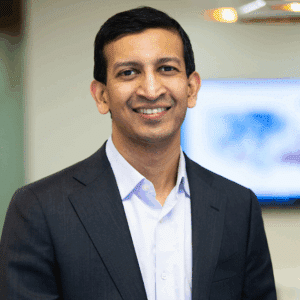
Raj Chetty
Raj Chetty is the William A. Ackman Professor of Economics at Harvard University and the Director of Opportunity Insights, which uses big data to study the science of economic opportunity: how we can give children from all backgrounds better chances of succeeding? Chetty’s work has been widely cited in academia, media outlets, and policy discussions in the United States and beyond.
Chetty received his Ph.D. from Harvard University in 2003 and is one of the youngest tenured professors in Harvard’s history. He has received numerous awards for his research, including a MacArthur “Genius” Fellowship, the John Bates Clark medal, given to the economist under 40 whose work is judged to have made the most significant contribution to the field, and Harvard’s George Ledlie prize, awarded for research that made the most valuable contribution to science, or in any way for the benefit of mankind.

Beate Völker
Beate Völker is a prominent German-born sociologist and professor at VU Amsterdam, known for her research on social networks, social cohesion, and urban communities. She currently also serves as the Scientific Director of the Netherlands Institute for the Study of Crime and Law Enforcement (NSCR). Völker’s work explores how social capital is shaped not only by personal choices but also by institutional and environmental contexts such as neighborhoods, workplaces, and cities. Her contributions, including large-scale longitudinal studies on personal networks, have deepened our understanding of how social structures influence well-being and societal stability. She received several large grants and is a recipient of the INSNA Simmel award of 2025.
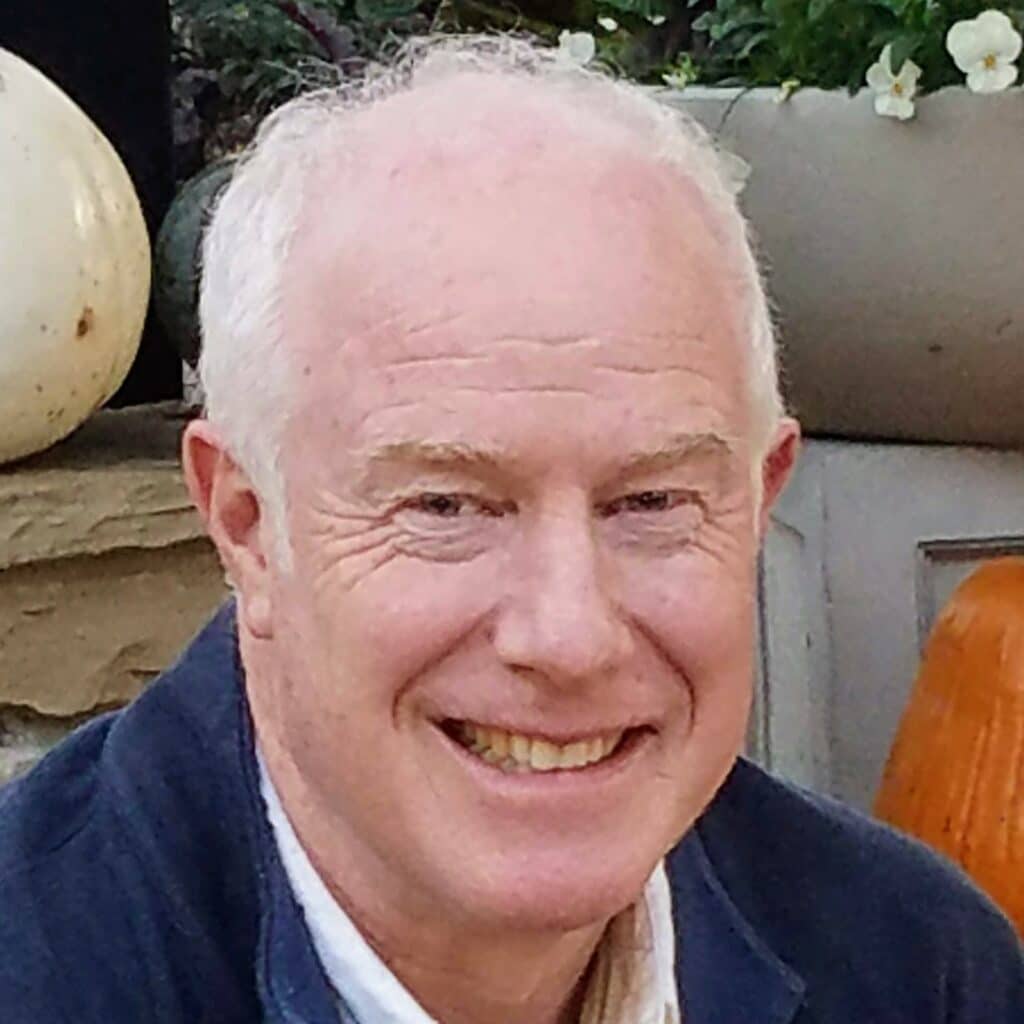
Michael Woolcock
Michael Woolcock is Lead Social Scientist in the World Bank's Development Research Group, where he has worked since 1998; for twenty of these years, dating back to the first cohort of the MPA/ID program (2001), he has also taught part-time at Harvard Kennedy School. During periods of leave he has been the Von Hugel Visiting Fellow at the University of Cambridge (2002), the founding research director of the Brooks World Poverty Institute (now the Global Development Institute) at the University of Manchester (2006-2009), and a foundation staff member of the World Bank’s first Knowledge and Research Hub, in Malaysia (2015-2017). His current research focuses on strategies for enhancing state capability for implementation, on transformations in local social institutions during the development process, and on using mixed methods to assess the effectiveness of "complex" interventions. In addition to more than a hundred journal articles and book chapters, he is the author or co-editor of thirteen books, including Contesting Development: Participatory Projects and Local Conflict Dynamics in Indonesia (with Patrick Barron and Rachael Diprose; Yale University Press, 2011), which was a co-recipient of the 2012 best book prize by the American Sociological Association's section on international development; Building State Capability: Evidence, Analysis, Action (with Matt Andrews and Lant Pritchett; Oxford University Press, 2017), which was central to the establishment of the Building State Capability Program at the Center for International Development, and was co-lead (with Samuel Freije-Rodriguez) of the World Bank’s biennial Poverty and Shared Prosperity Report 2020: Reversals of Fortune. Most recently, he has co-edited three scholarly volumes on case studies, popular culture, and the future of multilateralism, and a book for broader audiences on development’s role in both intensifying and (potentially) resolving humanity’s greatest challenges. Operationally, his current World Bank work involves contributing to major public sector reform efforts in Cambodia and Papua New Guinea (particularly in education), to helping the Global Environmental Facility learn from its most ‘challenging’ projects, and to working with teams articulating the Bank’s new Gender Strategy and its understanding of social sustainability. An Australian national, he has a PhD in comparative-historical sociology from Brown University.

Martin Everett
Martin Everett is Professor of Social Network Analysis and co-director of the Mitchell Centre for Social Network Analysis at the University of Manchester He holds a BSc in mathematics from Loughborough University, an MSc from Oxford University, and a DPhil jointly awarded by mathematics and sociology from Oxford, where he was supervised by Clyde Mitchell, a founding figure in social network analysis. With Stephen Borgatti, he co-authored UCINET, a widely-used software package for social network analysis, and edits the journal Network Science. He has published over 100 peer-reviewed articles and consulted with government agencies and private companies.

Frances Kraft
Frances Kraft is an experienced educator, community organizer, and restorative practitioner working to catalyze trusted connections that lead to collective action and systemic change. In her current role as Director of Research and Practice at the Foundation for Social Connection, she authored The Roadmap: Reimagining Infrastructure to Improve Social Capital. The report explores the role third places can play in building trust, belonging, and mutual responsibility to mobilize resources and work collectively for equitable policies. Prior to this role, she led engagement at Weave: The Social Fabric Project at The Aspen Institute. Frances spent a decade working in education outside Chicago, first as a classroom teacher and later as the founder of a non-profit coalition of families, students, and teachers working for equitable access, experiences, and outcomes for children. She earned a master’s degree in education policy at Harvard’s Graduate School of Education in 2016 and a doctorate in leadership at the University of Pennsylvania in 2025. She is currently working on a book based on her dissertation titled Building Civic Empathy Through Relational Dialogue: A Transformative Space for Change.

Shamichael Hallman
Shamichael Hallman is an internationally recognized civic innovator, author, and thought leader dedicated to strengthening communities through libraries, public engagement, and faith-based initiatives. As Senior Director of Civic Health and Economic Opportunity at the Urban Libraries Council, he advocates for public libraries as vital civic infrastructure. His book, Meet Me at the Library, explores how libraries foster democracy and bridge-building. A sought-after speaker, Shamichael has presented at top universities and library associations. Previously, Shamichael championed the multi-million-dollar renovation of the historic Cossitt Library in Memphis, contributing to Memphis Public Libraries earning the 2021 National Medal for Museum and Library Science. He was a 2025 Next City Vanguard Fellow, a 2023 Loeb Fellow at the Harvard Graduate School of Design, and has a Master's in Nonprofit Leadership from the University of Pennsylvania.
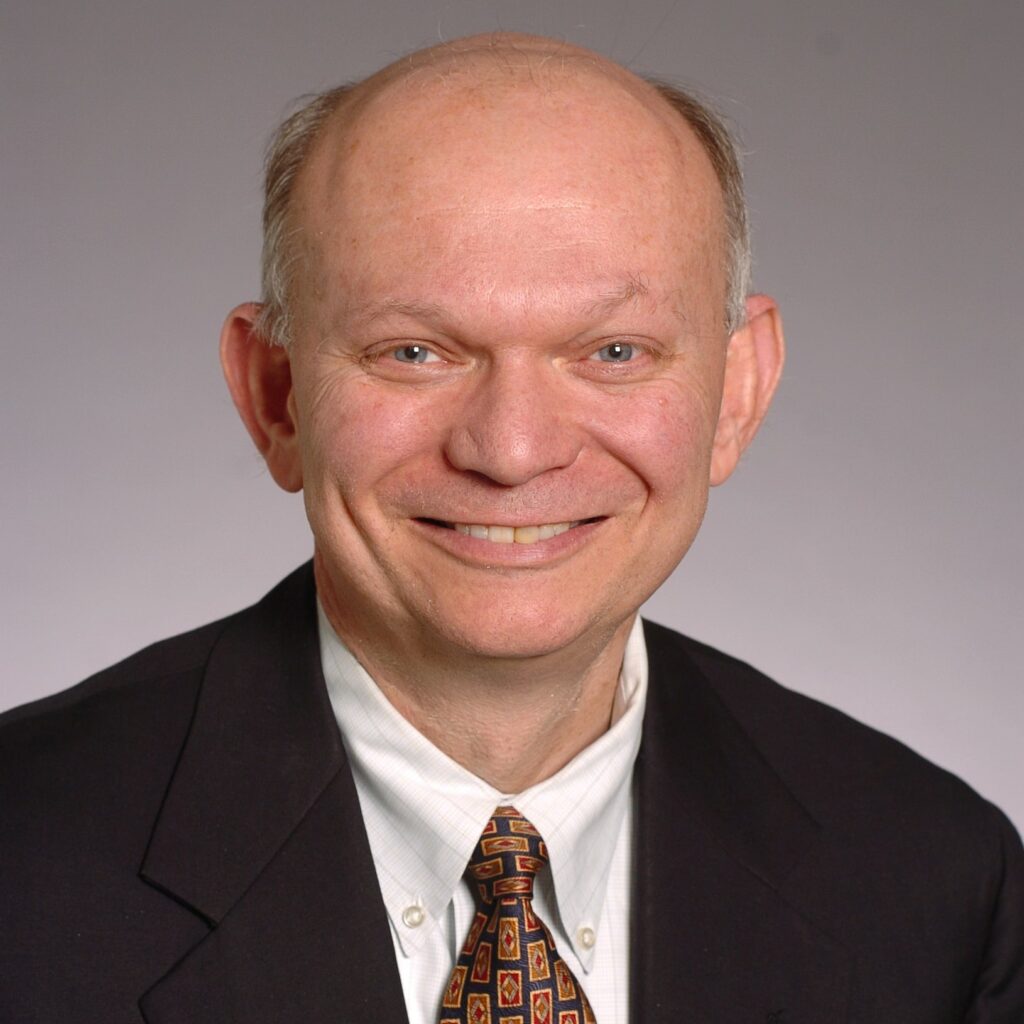
David Krackhardt
David Krackhardt is Professor of Organizations at the Carnegie Mellon University's Heinz College of Information Systems and Public Policy, with a joint appointment at the Tepper School of Business. Over the past 15 years, his research has focused on how the theoretical insights and methodological innovations of network analysis can enhance our understanding of how organizations function. He pioneered the concept of "cognitive social structures", wherein individuals provide their perceptions of the entire network in which they are embedded. He empirically has related these perceived structures to turnover, reputations and power in organizations. Another interest of his has been in developing methodologies for better understanding networks and their implications. His contributions in this arena include adapting the quadratic assignment procedure to multiple regression analyses of network data. In addition, he has developed methods drawing from graph theory for studying the shape and structure of organizations as a whole.
His published works have appeared in a variety of journals in the fields of psychology, sociology, anthropology and management. His current research agenda includes developing models of diffusion of controversial innovations, exploring and testing visual representations of networks, identifying effective leverage points for organizational change, and exploring the roles of Simmelian (super-strong) ties in organizations.