Social Capital and Economic Mobility
Raj Chetty
Communities share information about disaster risks in different ways, often resulting in uneven distributions of survival resources, confusion over responsibilities, and communication that fails to foster trust. Understanding how people are connected within a community can reveal who lacks access to resources, who plays key roles, and how information about risks and resources spreads during disasters. This talk introduces a new framework, the Risk-Sharing Commons, to address how people and communities, when facing disasters, navigate the inherent complexities of gathering and sharing critical information and resources. It also introduces the role of social capital and networks for collective improvisation through social-physical coupling, designed to manage information cascades in disaster risk communication and to integrate technical models of infrastructure interdependencies with behaviorally informed insights from local communities.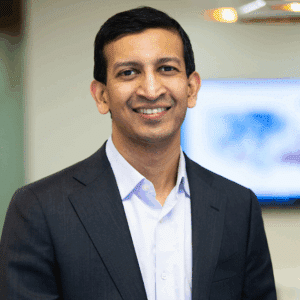
Raj Chetty is the William A. Ackman Professor of Economics at Harvard University and the Director of Opportunity Insights, which uses big data to study the science of economic opportunity: how we can give children from all backgrounds better chances of succeeding? Chetty’s work has been widely cited in academia, media outlets, and policy discussions in the United States and beyond. Chetty received his Ph.D. from Harvard University in 2003 and is one of the youngest tenured professors in Harvard’s history. He has received numerous awards for his research, including a MacArthur “Genius” Fellowship, the John Bates Clark medal, given to the economist under 40 whose work is judged to have made the most significant contribution to the field, and Harvard’s George Ledlie prize, awarded for research that made the most valuable contribution to science, or in any way for the benefit of mankind.
Collective Improvisation in the Risk-Sharing Commons during Compound Disasters: The Role of Social Capital and Networks
Dr Arif Sadri, School of Civil Engineering and Environmental Sciences, University of Oklahoma
Communities share information about disaster risks in different ways, often resulting in uneven distributions of survival resources, confusion over responsibilities, and communication that fails to foster trust. Understanding how people are connected within a community can reveal who lacks access to resources, who plays key roles, and how information about risks and resources spreads during disasters. This talk introduces a new framework, the Risk-Sharing Commons, to address how people and communities, when facing disasters, navigate the inherent complexities of gathering and sharing critical information and resources. It also introduces the role of social capital and networks for collective improvisation through social-physical coupling, designed to manage information cascades in disaster risk communication and to integrate technical models of infrastructure interdependencies with behaviorally informed insights from local communities.
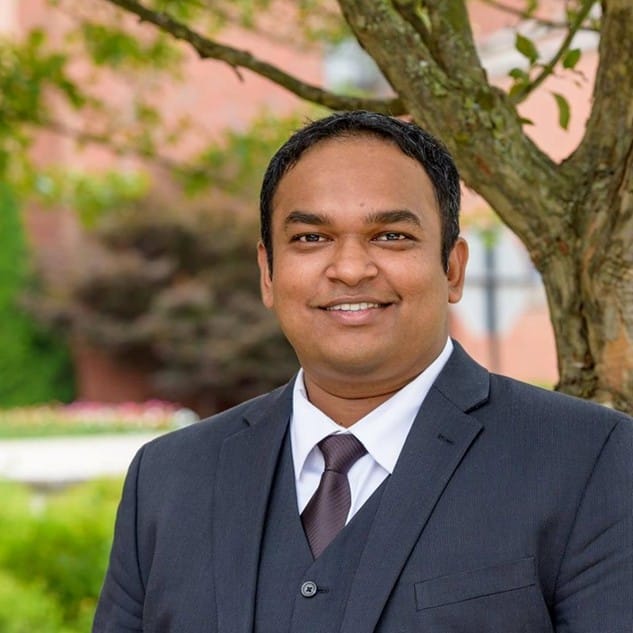
Arif Sadri is an Associate Professor in the School of Civil Engineering and Environmental Sciences at the University of Oklahoma (OU). He received his doctoral training at Purdue University and directs the Transportation, Risk, and Information Commons (TRICS) Lab at OU. Dr. Sadri’s research focuses on how transportation systems critically depend on both social and physical infrastructures in the context of natural and man-made hazards. He develops data-driven, network-based solutions to enhance bottom-up resilience in complex, interdependent systems. His work is funded by several federal and state agencies in the United States, and he recently received the CAREER award from the U.S. National Science Foundation.
The importance of social connection for brain health
 Professor Alan J. Gow
Whether and how brain health can be promoted or protected as we age is not just a global research priority but has increasing applied value given demographic trends towards older populations. Diverse approaches and methodologies have been used to address this, spanning large-scale longitudinal studies to focussed experimental designs. This keynote will focus on the process of identifying potential lifestyle and behavioural determinants of brain health to the opportunities to target those within interventions, with a specific focus on social connection. Studies have considered diverse aspects of social connection, from assessments of social networks and support to perceptions of loneliness. Social connections do, however, always exist within a wider context of other risk and protective factors, and multivariate approaches are becoming increasingly common, with ‘marginal gains’ providing a framework for considering the cumulative importance of social connection, physical activity, mental engagement and more. Ultimately, the goal is not simply to identify factors associated with brain health but to demonstrate how targeted behaviour change might promote or protect functions across the life course. Interventions have developed from early cognitive training studies to complex, whole lifestyle approaches. Translating observation to intervention brings specific challenges, including how social connection can or should be targeted in such approaches. These challenges notwithstanding, global research collaborations are providing promising evidence, and equally importantly, optimism for the important of social connection within the brain health research agenda.
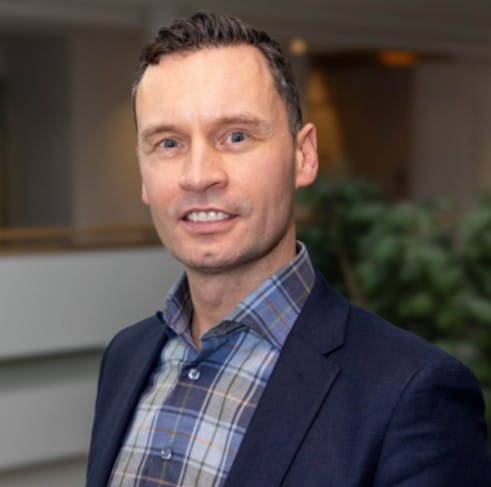
Alan J. Gow is a Professor of Psychology at Heriot‑Watt University (Edinburgh, UK) and a leading authority on brain health, cognitive ageing, and dementia‑related cognitive decline. His work sits at the intersection of healthcare, ageing, and prevention, with a strong focus on how modifiable lifestyle and social factors can reduce the risk and impact of age‑related cognitive disorders, including dementia.
With an academic background from the University of Edinburgh and international research experience in the UK and Denmark, Professor Gow has contributed extensively to large‑scale longitudinal studies such as the Lothian Birth Cohort, which track cognitive function from childhood into older adulthood. These studies have significantly advanced understanding of how early‑life factors, health behaviours, and social environments influence later‑life cognitive outcomes relevant to dementia and long‑term care planning.
Within the Healthcare stream, Professor Gow brings a translational perspective—bridging research and practice. Through The Ageing Lab at Heriot‑Watt University, his work informs the design of real‑world, community‑based interventions aimed at maintaining cognitive function, supporting independence, and improving quality of life for older adults. His research has direct relevance for public health policy, healthcare systems, and dementia‑focused prevention strategies in ageing societies.
Professor Gow regularly collaborates with healthcare professionals, policymakers, and community organisations, and is widely recognised for his ability to communicate complex research in an accessible and practical way for non‑academic audiences.
Social Capital, Social Networks and Measurement.
Professor Martin Everett
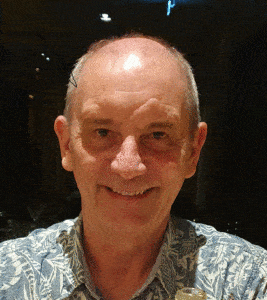
There has been a close link between the development of social capital theory and its manifestation in social network structures. Network position significantly affects the social capital available to individuals. Those occupying central positions with many direct connections typically enjoy greater influence and faster access to information. However, individuals positioned as bridges between otherwise disconnected groups—occupying structural holes—often possess unique advantages. They control information flow between segments, access diverse perspectives, and can broker opportunities that others cannot. These concepts relate to bonding and bridging social capital respectively. In this talk, we discuss the development of these ideas and critically examine the proposed measures. We pay particular attention to the measures proposed by Burt—constraint and effective size—in his theory of structural holes, examining how they perform and how they have been used and extended across different areas of application.
Martin Everett is Professor of Social Network Analysis and co-director of the Mitchell Centre for Social Network Analysis at the University of Manchester He holds a BSc in mathematics from Loughborough University, an MSc from Oxford University, and a DPhil jointly awarded by mathematics and sociology from Oxford, where he was supervised by Clyde Mitchell, a founding figure in social network analysis. With Stephen Borgatti, he co-authored UCINET, a widely-used software package for social network analysis, and edits the journal Network Science. He has published over 100 peer-reviewed articles and consulted with government agencies and private companies.